Burlington, VT; Durham, NH; Orono, ME; Syracuse, NY — The Northeastern States Research Cooperative (NSRC) is pleased to announce nearly $1.2 million has been awarded to three regional applicants to the 2025 Indigenous Forest Knowledge Fund (IFKF). The IFKF initiative advances forest research and scholarship directly related to Tribal homelands/territories or ancestral territories of the NSRC region (the Northern Forest region within Maine, New Hampshire, New York, and Vermont). The program is a targeted effort to (1) acknowledge and address barriers in opportunities for Indigenous youth to participate in forest research and (2) provide investments in the cultural and intellectual sovereignty of Tribal forest traditions alongside other forms of applied forest research.
“Working to advance Traditional Ecological Knowledge and Indigenous forest scholarship is deeply gratifying. It is awesome to see the IFKF grow and to deepen the NSRC’s relationships with Tribal partners around our shared appreciation for healthy forests.” Anthea Lavallee, Hubbard Brook Research Foundation & NSRC Executive Committee
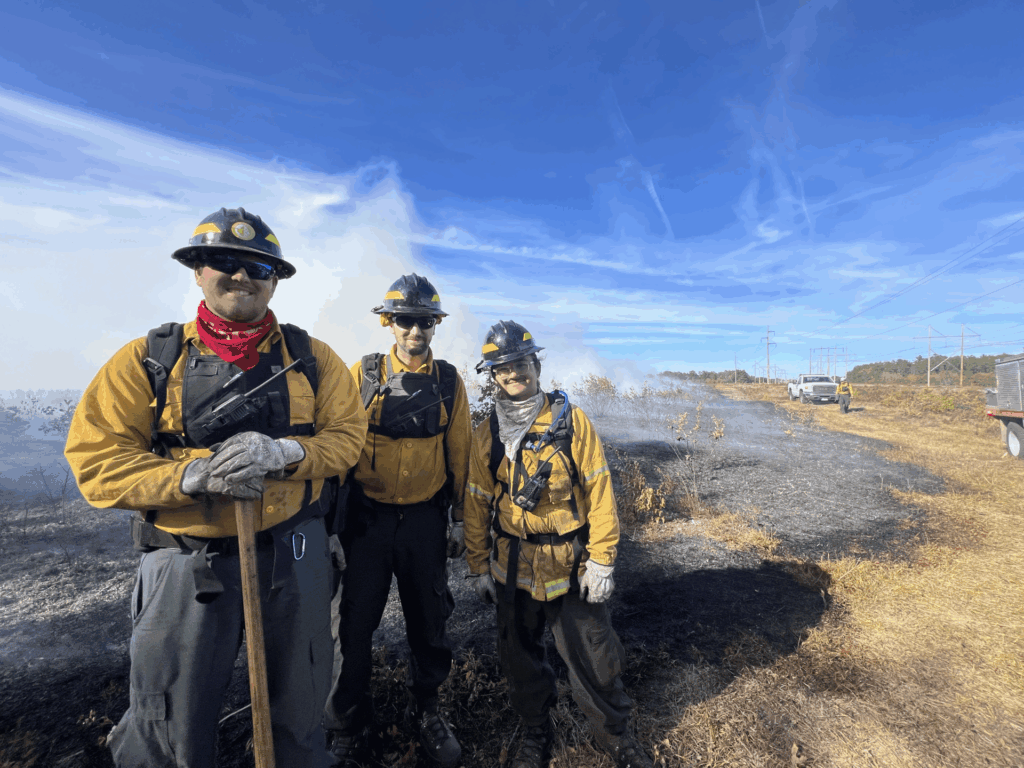
The awarded projects will directly engage Tribal members investigating a range of issues, including ash trees under threat from emerald ash borer (EAB), strengthening workforce capacity for Indigenous youth through training and education in forestry and fire management, and developing and sharing methods to propagate and restore understory plants of ecological importance and cultural significance to Indigenous Nations.
FSA Penobscot Nation apprentices participating in the recent Maine Prescribed Fire Training Exchange. Photo credit: Polly Weigand.
“We are in a very limited space in time with the amount of remaining healthy ash trees and this requires working together to support forest health and finding ways to sustain cultural relations. The incorporation of Wabanaki knowledges will enhance our strategies in responding to the threats posed by EAB. Through this project, I am excited to build new relationships at a regional scale and connect to new Tribal communities.” John Daigle, IFKF Awardee, University of Maine
The IFKF is funded through the U.S. Forest Service and administered by the NSRC. The NSRC’s IFKF Committee is responsible for organizing the proposal submission process and review process. The IFKF research agenda is set by a team of Indigenous Knowledge practitioners who also make the award decisions. Ten proposals were submitted in response to the request for proposals, seeking a total of $4,028,386 in funding. The reviewers were impressed by these intriguing and practical proposals with Indigenous project leadership. The most competitive and subsequently awarded proposals described strong relationships with Tribal Nations and realistic outcomes with a high likelihood of success.
“It was a pleasure to take part in reviewing intriguing Indigenous-led research that will support the well-being of Tribal communities, lands, and forests.” Tribal Consultant Reviewer
2025 IFKF Awarded Project Summaries
PI John Daigle (ME), Sustaining basketmaking in Waponahkik through increased accessibility, processing, and storage opportunities. Project collaborators and researchers include members of the Houlton Band of Maliseet Indians, Passamaquoddy Tribe, Penobscot Nation, Mi’kmaq Nation, Wabanaki Nation, and St. Regis Mohawk Tribe. With the onset of emerald ash borer (EAB) in forests where Wabanaki basketmakers harvest, our project goal is to advance basketmaker stewardship of remaining healthy ash and develop technologies that support the processing and storage of ash splints before widespread mortality. Ultimately, this will sustain the material supply for Wabanaki basketry. This project takes a community-driven approach that prioritizes participation of Wabanaki ash harvesters.
PI Rachel Swanwick (ME), Forest Stewards Apprenticeship: Bridging Indigenous Knowledge, Research, and Forest Stewardship with the Penobscot Nation. Project collaborators and researchers include members of the Penobscot Nation and Pueblo of Jemez. This project aims to strengthen Tribal workforce capacity through a partnership with the Forest Stewards Guild and the Sovereign Nation of the Panawahpskek (Penobscot Nation) by providing training, education, and employment in forestry and fire management for Indigenous youth.
PI Gregory McGee (NY), Restoration of Culturally and Ecologically Significant Forest Understory Vascular Plants in Haudenosaunee Homelands: Building a Model for Broader Forest Resiliency in the Northeast. Project collaborators and researchers include members of Haudenosaunee Environmental Task Force. The goal of this project is to establish a partnership among Haudenosaunee leaders and knowledge holders, restoration scientists, and private and public land managers, to collectively develop and share methods to propagate and restore understory plants of ecological importance and cultural significance to Indigenous Nations in the successional forests that dominate the Northeast landscape.
About the Northeastern States Research Cooperative
NSRC (https://nsrcforest.org) is a competitive grant program for Northern Forest research, authorized by Federal legislation (Public Law 105-185), with allocations to the program directed by the USDA Forest Service. Since its inception, the NSRC has funded more than 345 projects, engaging 50 different institutions, agencies, and organizations across the northeast. Federal funding comes from Congressional appropriations through a partnership with the research and development arm of the USDA Forest Service. The private sector, states, and other organizations offered matching funding to support the research on the Northern Forest and its 26 million acres in Maine, New Hampshire, New York, and Vermont.
NSRC is jointly directed through the U.S. Department of Agriculture Forest Service’s Northern Research Station and a designated institution in each of the four Northern Forest States (Rubenstein School of Environment and Natural Resources at the University of Vermont, the University of New Hampshire in cooperation with the Hubbard Brook Research Foundation in New Hampshire, the Center for Research on Sustainable Forests at the University of Maine, and the State University of New York College of Environmental Science and Forestry). These institutions are all equal opportunity providers.
Pingback: John Daigle and Darren Ranco Secure NSRC Indigenous Forest Knowledge Fund Award - Senator George J. Mitchell Center for Sustainability Solutions - University of Maine
Comments are closed.