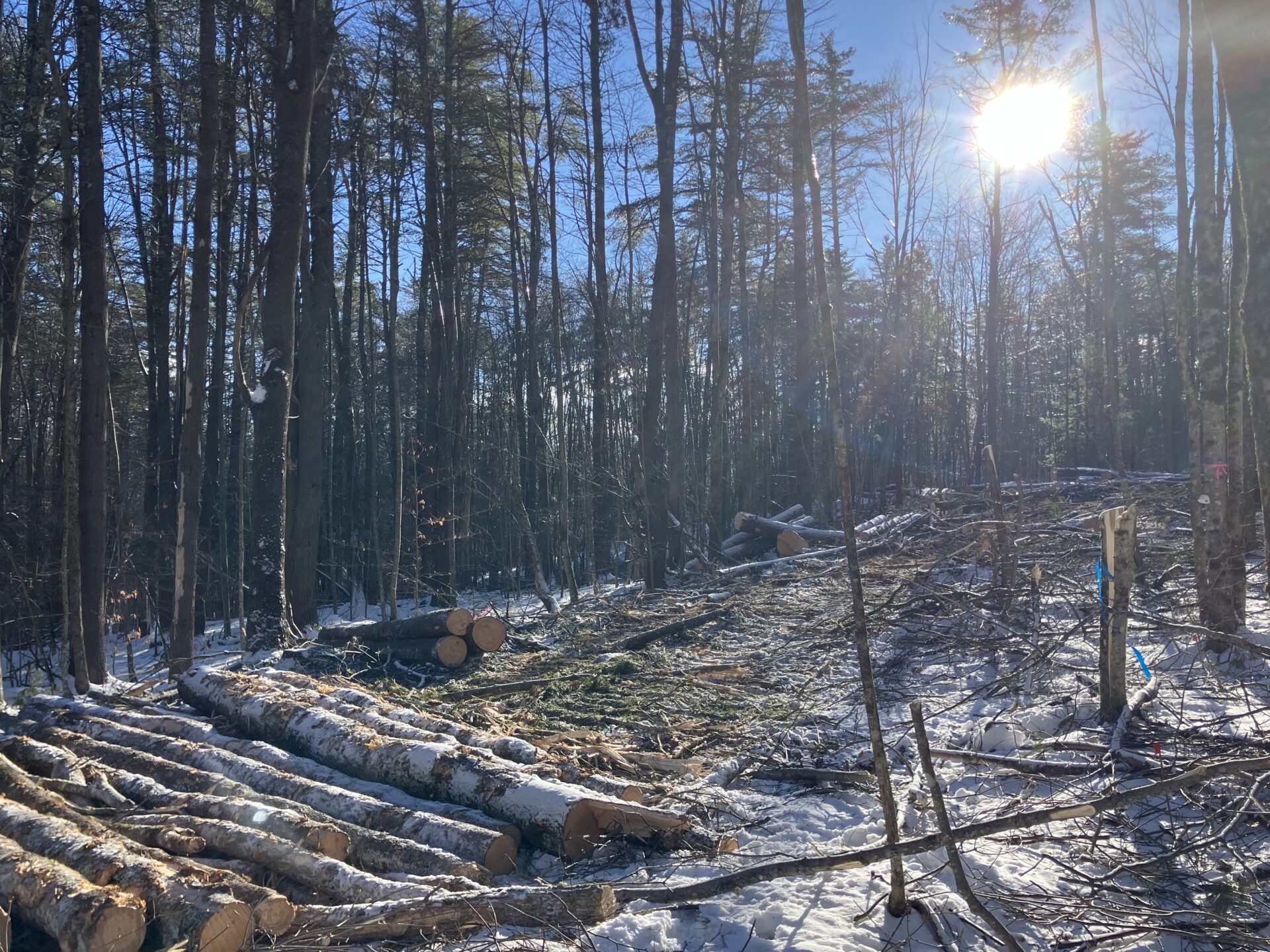
Trialing Best Management Practices for Preserving or Extending Frozen Ground Conditions during Winter Harvesting Operations
Principle Investigator: Steven Roberge, University of New Hampshire
Abstract: Best Management Practices (BMPs) are techniques implemented by the timber harvesting industry to protect water quality, soil integrity and productivity, and other forest resources. BMPs are widely adopted and used successfully to protect forest resources during challenging weather conditions. Extreme and unpredictable weather is reducing the efficacy of established BMPs, and increasingly variable winter weather is impacting winter harvesting operations. Logging conditions of the Northern Forest today and in the future include reduced depth and duration of seasonal snowpack and soil thawing during the winter months. Rapidly shifting winter weather affects operational productivity and costs for logging contractors, leading to supply chain uncertainty, increased costs for downstream businesses (e.g., inefficient inventory management), and deteriorating soil health. This project focuses on increasing BMP installation knowledge and use to help mitigate logging operation uncertainty and soil-related forest resource impacts by studying widely used BMPs in a new context. We aim to determine whether and how BMPs that armor skid trails in warm and wet conditions might also be used to preserve and extend frozen ground conditions during winter harvesting operations. Our research will enable us to provide guidance on how to establish consistent winter operating conditions that can increase logging productivity and safeguard soil health during changing winter weather.